Julia Child Rose
Julia Child Rose (Rosa 'WEKvossutono') — An AARS award-winning floribunda rose with large clusters of buttery gold double flowers and a delightful licorice-candy fragrance, named in honor of the legendary chef.
Plant Details
- Botanical Name: Rosa 'WEKvossutono' PP18473
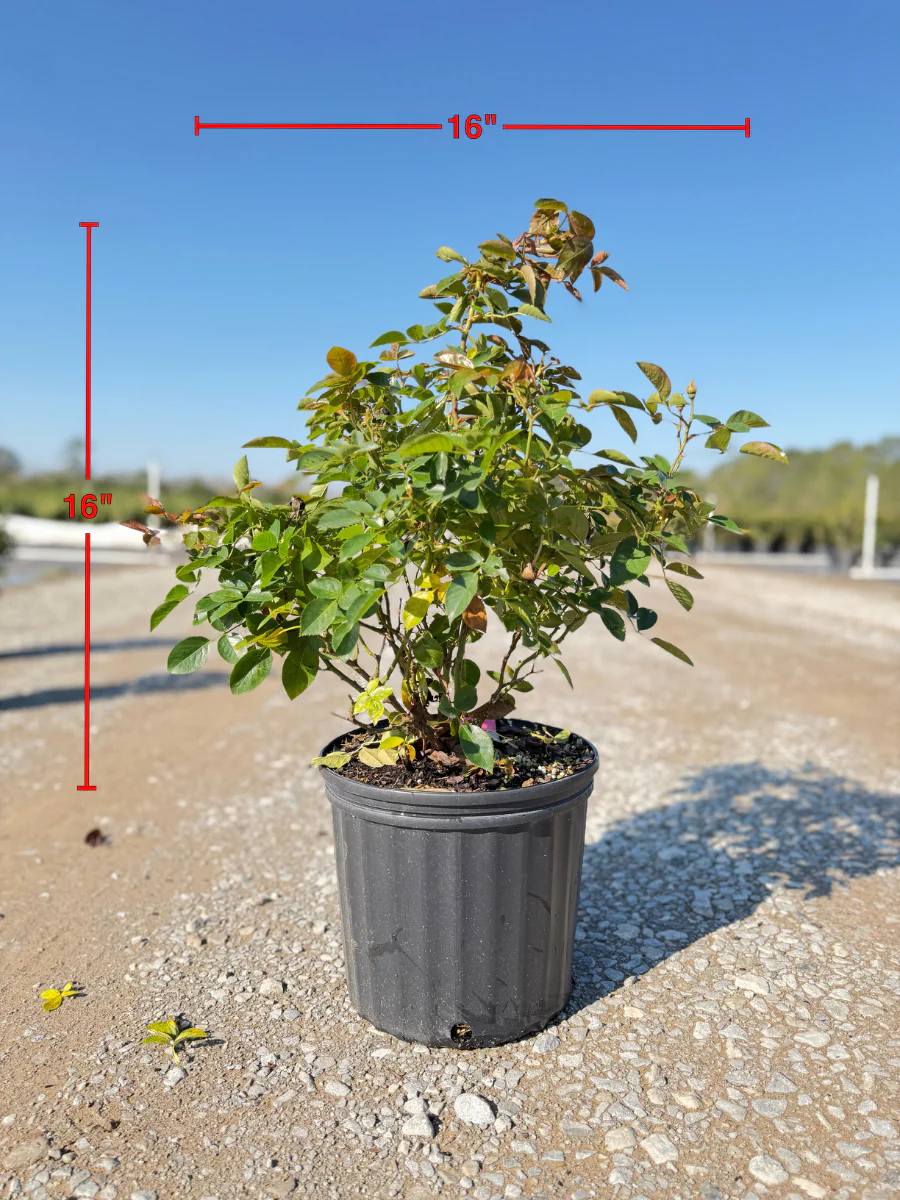
- Mature Size: 3–4 ft tall × 2–3 ft wide
- Growth Rate: Moderate
- Bloom Color: Buttery gold-yellow (spring through fall)
- Foliage: Deciduous — dark green, semi-glossy
Growing Conditions
- Sunlight: Full sun (6+ hours)
- Water Needs: Moderate — regular watering during bloom season
- Soil: Rich, well-drained, slightly acidic
- Hardiness Zones: USDA 5–9
Why Choose Julia Child Rose?
- AARS (All-America Rose Selections) award winner
- Outstanding disease resistance for a floribunda
- Sweet licorice-candy fragrance
- Repeat bloomer with abundant flower clusters
Care Tips
Plant in full sun with good air circulation. Deadhead spent blooms to encourage repeat flowering. Prune in late winter before spring growth begins. Feed monthly during the growing season with rose fertilizer.
Product Information
Product Information
Shipping & Returns
Shipping & Returns
Description
Julia Child Rose (Rosa 'WEKvossutono') — An AARS award-winning floribunda rose with large clusters of buttery gold double flowers and a delightful licorice-candy fragrance, named in honor of the legendary chef.
Plant Details
- Botanical Name: Rosa 'WEKvossutono' PP18473
- Mature Size: 3–4 ft tall × 2–3 ft wide
- Growth Rate: Moderate
- Bloom Color: Buttery gold-yellow (spring through fall)
- Foliage: Deciduous — dark green, semi-glossy
Growing Conditions
- Sunlight: Full sun (6+ hours)
- Water Needs: Moderate — regular watering during bloom season
- Soil: Rich, well-drained, slightly acidic
- Hardiness Zones: USDA 5–9
Why Choose Julia Child Rose?
- AARS (All-America Rose Selections) award winner
- Outstanding disease resistance for a floribunda
- Sweet licorice-candy fragrance
- Repeat bloomer with abundant flower clusters
Care Tips
Plant in full sun with good air circulation. Deadhead spent blooms to encourage repeat flowering. Prune in late winter before spring growth begins. Feed monthly during the growing season with rose fertilizer.